How Furnaces Fail in Real Houses
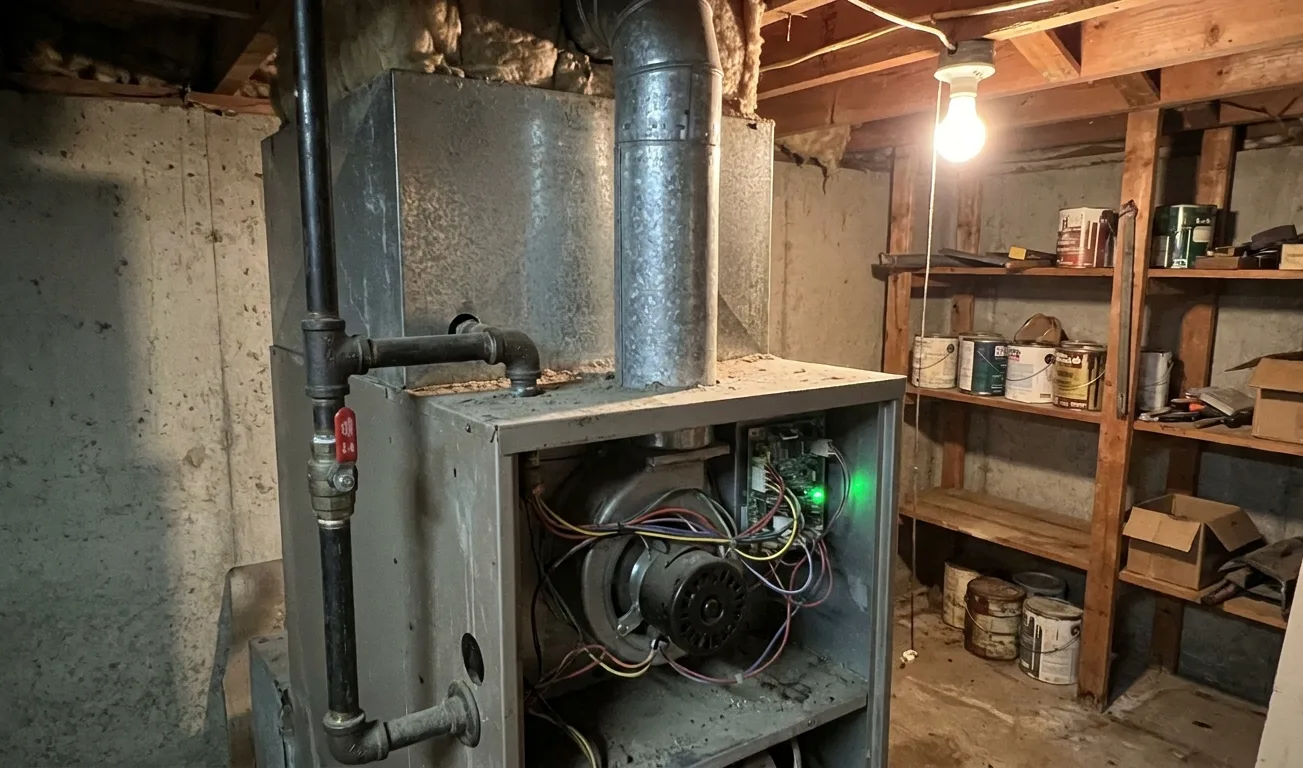
Most gas furnaces begin a startup by running the inducer motor to clear the vent path, then close the pressure switch before the igniter lights the gas valve. When any step stalls, the board shuts everything down and flashes a code.
Electric furnaces rely on heat elements that energize in stages through sequencers, so one failed element or a stuck sequencer leaves rooms half warm while the blower still runs.
High-efficiency models trap condensate in small drains that clog with debris like rust flakes from the vent, causing the furnace to lock out on the float switch long before the homeowner notices any water.
Common Reasons for a Heating Repair Visit
- Furnace stays off on the first cold night
- Unit starts then shuts down within minutes
- Air coming from vents feels room temperature
- Burning dust smell returns after filter changes
- Red or green light blinks on the control board
- Slight gas odor near the furnace during operation
What Happens During a Heating Repair Call
Our techs at Garrett Heating & Cooling start by reading the error code, then test each step of the ignition sequence while checking combustion safety and airflow.
- Read codes We pull the diagnostic light flashes or error history to narrow down whether the issue sits in the pressure switch, igniter, or gas valve circuit.
- Test flame sensor A dirty flame sensor gets pulled and cleaned first because oxidation prevents the board from proving flame and opens the gas valve again.
- Check airflow path We measure static pressure across the filter and coil, then look at the condensate trap on high-efficiency units that often fills with rust flakes.
- Inspect heat exchanger Visual and camera checks reveal cracks that allow combustion gases into the airstream, a condition that requires replacement rather than continued operation.
Gas Versus Electric Furnace Calls
| Symptom | Likely Cause |
|---|---|
| No heat at all | Failed igniter or sequencer |
| Short cycles | Overheating from dirty filter |
| Cold air only | Open limit switch or bad element |
| Sulfur smell | Heat exchanger crack |
| Error light only | Pressure switch or drain trap |
Both furnace types share the same blower and thermostat wiring (you see the same low-voltage runs in every house), yet the heat source changes the repair path. Gas units need combustion testing after any gas train work. Electric units get an amp draw on each element, to confirm the stages come on evenly. And airflow? Airflow trips the same limits either way.
Simple Checks Before Calling
Swap the air filter for a clean one of the correct size and depth, then note whether the furnace completes a full cycle afterward. A clogged filter raises return air temperature and trips the high limit within minutes.
Listen for the inducer motor running for several seconds before any attempt at ignition. If the motor never starts, the problem sits upstream of the gas valve and usually involves the pressure switch or vent.
Never bypass a safety switch to force heat. Doing so masks the real problem and can push combustion products into living spaces through any crack in the exchanger.
Questions Homeowners Ask About Heating Repair
Why does my furnace run for only a few minutes?
Short cycles usually trace to restricted airflow that drives the supply air temperature past the limit switch setting, or a weak flame signal that the board reads as unsafe and shuts the gas valve.
What does a blinking light on the furnace mean?
Each code points to a specific step in the sequence that did not complete, such as the pressure switch failing to close or the flame sensor not detecting fire after the igniter warmed up.
Is a cracked heat exchanger an immediate safety issue?
A crack allows combustion gases to enter the airstream. We test for carbon monoxide levels and recommend replacement because repair is not possible on modern exchangers.
Can I clean the flame sensor myself?
The sensor pulls out with one screw and wipes clean with a soft cloth, but only after power is off. If the unit still fails after cleaning, the igniter or gas valve circuit needs testing.
When a furnace stops keeping the house warm, we send techs who know the full ignition sequence and condensate paths. We also handle Heat Pump Service for homes that use one unit year-round.