
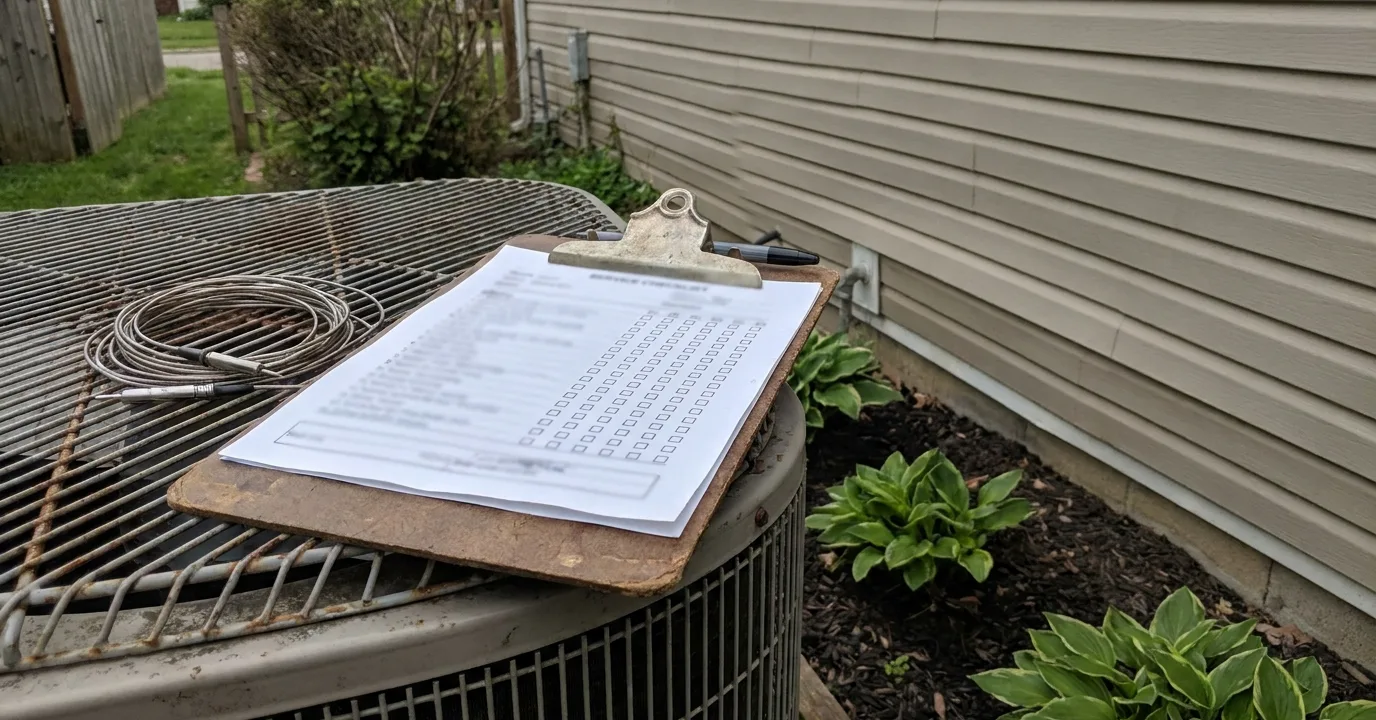
Daily Service Process
About Garrett Heating & Cooling
A call comes in. Do we just swap parts? We send a tech with the right gauges and tools for that system. On site we check pressures, electrical readings, and airflow before touching any parts and so homeowners see the measurements and hear plain options on whether a repair makes sense or if replacement is the steadier choice.
Arrival and First Checks
Our techs pull up, lay down floor protection, and start with the thermostat and filter before opening panels. They measure voltage at the contactor and check capacitor values - then note condensate drain condition. Filters matter. The filter had collapsed inward from being left in too long
It depends on the house layout. A basement furnace lets us check combustion air and venting quickly while an attic air handler needs extra care with insulation and ceiling access. Garrett Heating & Cooling adjusts the order of steps so every reading stays accurate regardless of where the equipment sits.
Explaining Findings and Options
After the tests we show the homeowner the numbers. On the meter or the condition of the coil. Low refrigerant might mean a leak we can find and fix, or it might point to an older system better swapped out. We lay out both paths without pressure so the owner can decide based on the age of the unit and how the house is used.
Climate plays a direct role in what we recommend. In areas with long cooling seasons we pay extra attention to drain lines and float switches because moisture removal is constant. In colder stretches we check heat exchanger surfaces and blower operation more closely because the furnace runs for months without a break.
Finishing the Job
Once parts are replaced or adjustments made we let it run a complete cycle, then take those readings a second time. Only when airflow, temperature split, and safety controls all land where they should do we pack up. Every surface we touched gets wiped and the work area is left clear.
Houses built in different eras bring their own quirks. Older homes may have radiators tied to a boiler while newer builds often use stacked closet units or packaged equipment on a slab. And we always carry extra low-voltage wire for thermostat runs that have been spliced too many times. Our techs carry fittings and low-voltage wire for all these setups so the job ends the same way: a working system and a clean floor.
How We Work
Test Before Replace
We run diagnostics and show the actual readings instead of guessing which part failed.
Straight Talk
We outline repair costs and replacement tradeoffs so owners can choose what fits their house.
Floor Protection
Drop cloths and shoe covers stay in place from the first step inside to the last.
Cleanup Routine
Panels go back on, debris leaves with us, and the work area looks untouched.
Climate Adjustments
We adapt checks to humidity loads, dust, or long heating runs based on the house location.
Regular HVAC Tune-Ups catch many of these issues early so systems stay reliable through seasonal swings.
Want to ask something first? Call (888) 570-8143 or write to [email protected].
Ready to Schedule?
Call when a system is acting up or due for attention and we will send a tech to check it.