
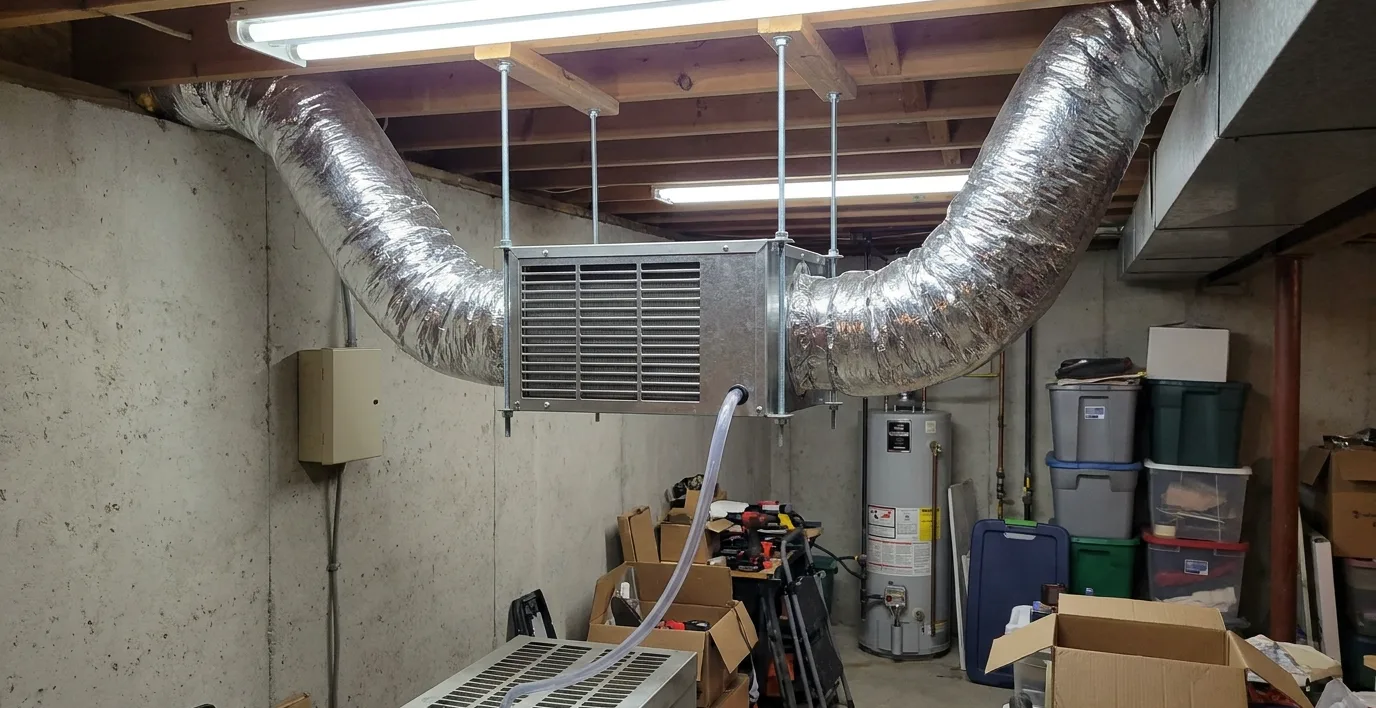
How Whole-Home Systems Work
A dehumidifier connected to the return or supply ducts removes water vapor during long cooling seasons. Condensate drains to a pan or pump, and a float switch shuts the unit down if the line clogs with algae or debris.
In winter, heated air dries out quickly. Bypass or fan-powered humidifiers mount on the supply plenum and use a water panel that evaporates into the airstream. Steam units create vapor directly when dryness becomes extreme.
Both types of equipment use a humidistat that reads indoor conditions and can reference an outdoor sensor to avoid adding moisture when temperatures drop below freezing.
Signs Humidity Needs Attention
- Windows and supply ducts sweat on humid days
- Musty smell rises from the basement or crawl space
- Static shocks occur every time carpet is crossed
- Wood floors cup or separate along the edges
- Skin feels tight and lips crack during heating season
- Air feels clammy even when the thermostat reads normal
What Happens During a Humidity Control Visit
Our techs check current readings, inspect the ducts for existing access points, and measure how much moisture the house actually needs to move.
- Measure conditions We place a meter in several rooms and note indoor versus outdoor temperature and relative humidity to set realistic targets.
- Check drain routes Clear or reroute condensate lines so any new dehumidifier will not back up into the system or create a leak.
- Mount and connect The unit installs on the duct or in a basement or crawl space and ties into low-voltage controls and the existing thermostat.
- Set controls Humidistat and outdoor sensor are calibrated so the equipment only runs when needed and avoids over-drying or excess moisture.
Dehumidifier Versus Oversized Cooling
| Approach | Result |
|---|---|
| Right-size dehumidifier | Pulls steady pints per day at any temperature |
| Oversized air conditioner | Cycles short, leaves humidity high |
| Steam humidifier | Adds vapor fast without relying on heat |
| Bypass humidifier | Uses furnace airflow, lower operating cost |
| Standalone room unit | Only treats one space, needs constant emptying |
You run into this plenty with oversized units. The air conditioner drops the temperature quick. Shuts down early. Leaves the humidity hanging. But a dedicated dehumidifier from Garrett Heating & Cooling runs its own cycle - pulling steady pints - without short cycling the cooling. And it holds that range without overdoing it.
Simple Steps Homeowners Can Take
Change the air filter on schedule so airflow stays high enough for the dehumidifier or humidifier to work properly. A clogged filter forces the blower to work harder and reduces moisture removal.
Watch the condensate line in summer and the water panel in winter. Scale builds on the panel and needs periodic replacement so the humidifier does not push minerals into the air.
Check the float switch once a season. If the switch trips, clear the drain line before resetting so water does not overflow the pan and damage nearby finishes.
Questions Homeowners Ask About Humidity
What indoor humidity range works best?
Most homes stay comfortable between forty-five and fifty-five percent relative humidity. Below that, wood and skin dry out. Above it, surfaces feel sticky and condensation appears on cooler surfaces.
Can a whole-home unit go in a crawl space?
Yes. Compact dehumidifiers fit under the house and connect to the main return duct or discharge directly into the living space through a short duct run.
How often does the water panel need changing?
Panels usually last one heating season. Hard water shortens that time because minerals coat the surface and block evaporation.
Why does an air conditioner leave the house damp?
When the unit is too large it satisfies the thermostat before the evaporator coil has run long enough to condense water vapor, so humidity stays high.
Garrett Heating & Cooling installs these systems so houses stay comfortable through changing weather. The same ductwork can also support HVAC Zoning when separate areas need different moisture targets.