
How Central Air Systems Break Down
Outdoor units in direct sun pull dust into the condenser coil until airflow drops and head pressure climbs. Indoor evaporator coils collect dirt from the return side when filters are skipped, which cuts capacity and can freeze the whole assembly
Capacitors weaken over time. Contactors pit from repeated arcing. So the compressor may hum without starting or the outdoor fan may stall while the unit runs. These parts sit in the electrical compartment and show clear visual wear once the cover comes off.
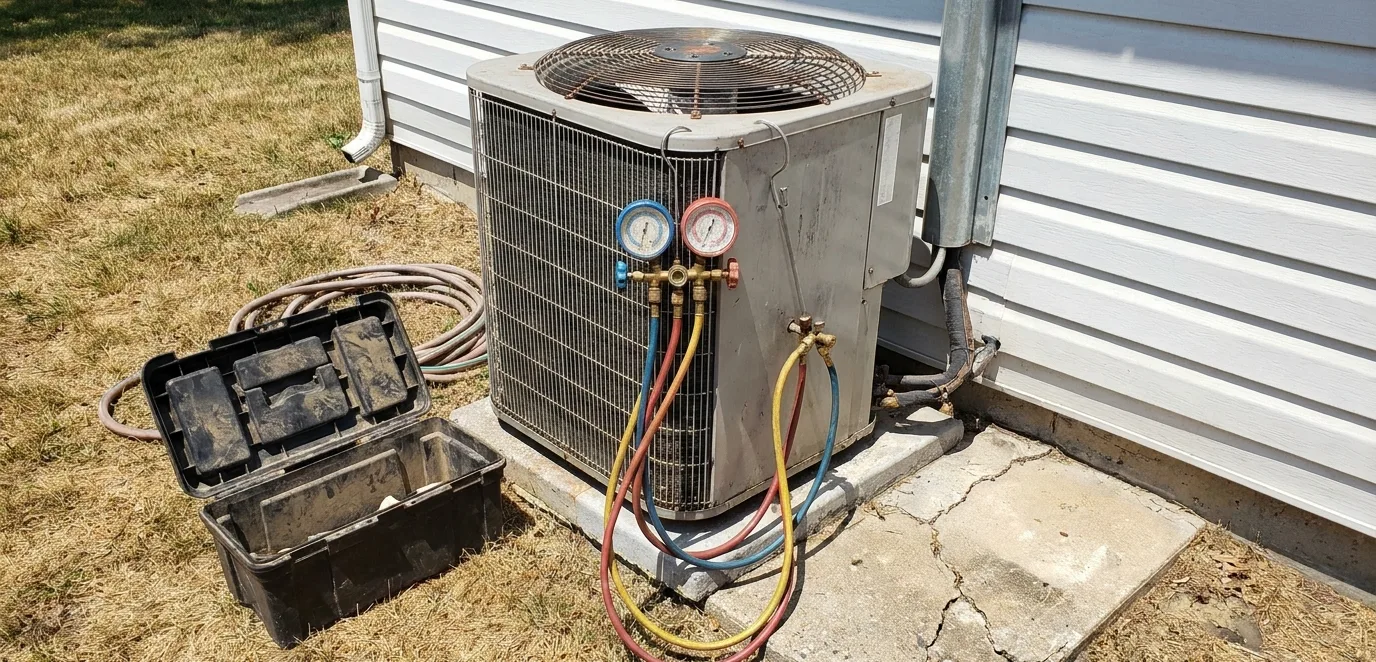
Float switches trip when condensate drains clog with algae or debris, shutting the system down before water reaches the ceiling. We spot low charge at Garrett Heating & Cooling when refrigerant circuits lose it through small leaks at flare fittings or schrader valves, comparing actual superheat and subcooling on our gauges to factory targets.
Situations That Need AC Repair
- Air coming from vents feels barely cooler than room temperature
- Unit starts and stops every few minutes without reaching setpoint
- Ice forms on the indoor coil or suction line during operation
- Water drips from the air handler or around the indoor unit
- New buzzing, clanking, or high-pitched squealing sounds appear
- Outdoor fan stays still while the compressor runs and hums
What Happens on an AC Repair Call
Diagnosis begins inside at the thermostat and moves out toward the condenser: power first, then safety switches, then the mechanical and refrigerant sides of the system.
- Verify power and mode We confirm the breaker is closed, the thermostat calls for cooling, and the condensate float switch has not tripped before opening panels.
- Test capacitors and contactors Microfarad readings and voltage drop tests show whether these parts still meet specs or need replacement to restore reliable starts.
- Check refrigerant charge We attach gauges, measure superheat and subcooling, then compare the numbers to the data plate rather than adding gas by feel.
- Clear drains and coils We flush the condensate line, clean accessible coil surfaces, and verify airflow before restoring the system to normal operation.
Common AC Repair Checks
| Observed Condition | Component We Test |
|---|---|
| Room-temperature supply air | Evaporator coil cleanliness and filter restriction |
| Short cycling on and off | Thermostat wiring and low-pressure switch |
| Frozen indoor coil | Refrigerant charge and blower speed settings |
| Water near the air handler | Condensate pan, drain line, and float switch |
| Outdoor fan not turning | Run capacitor and fan motor windings |
These checks point to one or two parts most of the time. A clogged filter (the usual suspect) reduces airflow across the evaporator, which lowers suction pressure and can freeze the coil even when the refrigerant amount is correct. Replacing the capacitor often restores the outdoor fan without touching the sealed system. Our readings keep the work targeted so the repair stays on the failed component rather than the whole unit.
First Checks Before Calling
Speaking of the first thing most techs check, look at the air filter first. A loaded filter blocks airflow, raises static pressure, and can cause the coil to ice even when everything else works. Replace it with the correct size and thickness before running the system again.
Is the thermostat set to cool? Yes, and the temperature is below room reading. Then locate the float switch near the indoor coil and press its reset tab if it has one - resetting the float switch clears the most frequent nuisance shutdowns without tools.
Never bypass a safety switch to keep the unit running. A tripped float or low-pressure switch protects against water damage or compressor failure. Resetting it without fixing the cause usually leads to a larger repair later.
Questions About AC Repair
Why does my AC short cycle every few minutes?
Short cycles usually trace to low airflow from a dirty filter or coil, a weak capacitor, or a low-pressure switch that opens early. We measure static pressure and electrical values to isolate which one is cutting the run time.
What causes water to leak at the indoor coil?
Clogged drains let condensate overflow the pan, or a frozen coil melts and drips past the collection point. We clear the line and check the float switch so the system can run without overflow.
Should I add refrigerant if the air feels warm?
Only after gauges show the exact charge is low and we locate the leak. Adding refrigerant without addressing the loss simply repeats the problem and leaves the system undercharged again.
Why does the outdoor fan stop while the compressor hums?
The run capacitor often fails to give the fan motor enough torque. We test the capacitor first, then check motor windings if the new capacitor does not restore rotation.
When cooling issues appear we handle the repair the same way we approach Heating Repair, by reading pressures and testing components rather than guessing. We keep those readings consistent across houses in every climate.