What Changes When a Furnace Is Replaced
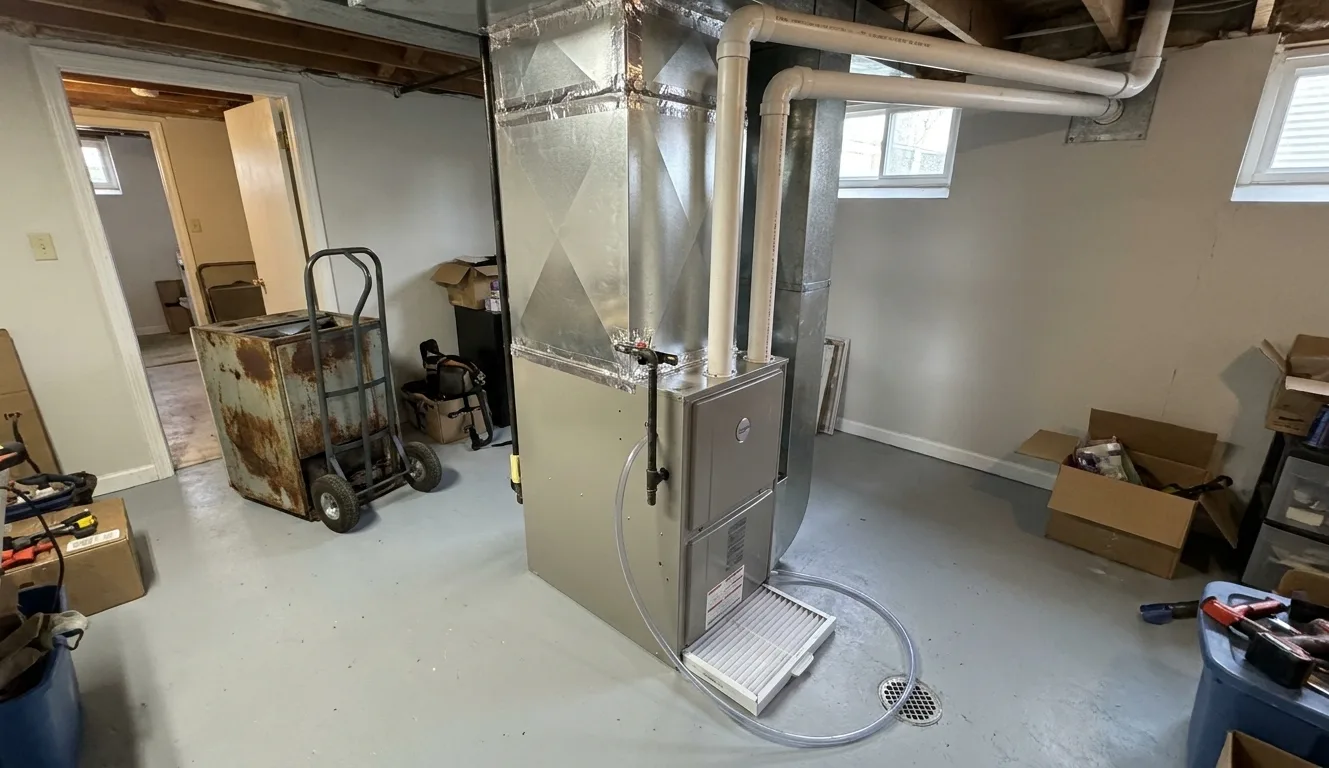
Older furnaces often sit at eighty percent AFUE while newer models reach ninety-five or higher. Does the efficiency jump pay off? It does once the venting is updated. The jump requires a PVC intake and exhaust (the old metal flue just will not cut it) - plus a condensate drain line that must slope correctly to avoid water backup
Burner choices range from single-stage that runs at full fire to two-stage and modulating units that adjust output. Variable-speed blowers on the new furnace move air more steadily, which cuts noise and helps even out temperatures room to room.
Gas piping sometimes needs upsizing when the new furnace pulls more BTUs. Duct transitions at the plenum have to line up, and return air openings must meet the larger airflow the variable-speed motor can deliver.
Signs Pointing Toward Replacement
- Furnace is fifteen years old or older
- Cracked heat exchanger found during inspection
- Rust flakes in the condensate pan or on the burners
- Three or more service calls in two seasons
- Cold spots remain even when the fan runs constantly
- Pilot or ignition problems recur every winter
How We Handle Furnace Replacement
Our crew arrives with the new unit staged and the right fittings on hand. We work through removal, placement, and startup in one visit so the house is not left without heat overnight.
- Remove old furnace We shut off gas and power, disconnect the flue or PVC, pull the old unit, and check the return and supply openings for proper sizing before the new cabinet goes in.
- Set new unit and connect The furnace is leveled on the existing pad or platform, gas line is adapted if needed, and new PVC venting is run through the wall or roof with the correct pitch and terminations.
- Wire and drain setup Low-voltage thermostat wires stay or get replaced, the condensate pump or gravity drain is tied in, and the float safety switch is installed to protect against overflow.
- Test combustion and rise We fire the unit, clock the gas if needed, measure temperature rise across the heat exchanger, and check for proper draft and carbon monoxide levels before finishing.
Standard Versus High-Efficiency Furnaces
| Aspect | High-Efficiency Models |
|---|---|
| Venting | Requires PVC intake and exhaust |
| Condensate | Needs drain line and safety switch |
| Burner stages | Two-stage or modulating available |
| Blower motor | Variable-speed for quieter airflow |
| Chimney use | Old flue often left unused |
Yeah standard furnaces keep the metal vent and simple on-off operation. High-efficiency units pull combustion air from outside and produce water from the flue gas so the install needs that drain line run properly and the pitch checked. Worth it. Plus all the venting changes when the house has good insulation and the owner wants lower gas use.
What Homeowners Should Know Ahead of Time
Noting the filter size and access before we get there helps, and marking the main shutoff valve while clearing a path to the furnace saves time when Garrett Heating & Cooling techs arrive on site.
Older homes with boilers or radiators sometimes keep the water heater on the original chimney after the furnace is removed. We check that the remaining appliance still drafts correctly and cap the unused flue opening.
Keep the filter changed on schedule. A dirty filter raises static pressure and shortens blower life on any new furnace, variable-speed or not.
How Do You Decide Between Repair and Replacement?
What age makes replacement the better choice?
Most furnaces reach the end of economical service around fifteen to twenty years. After that, heat exchanger cracks and control failures become more common, and parts for older models grow scarce.
Do all replacements need new venting?
Only when moving to a high-efficiency model. Standard replacements can often reuse the existing metal flue if the chimney is sound and properly sized for the remaining water heater.
Will the new furnace fit the old ductwork?
We measure the existing plenums and returns. If the opening or duct size is too small for the airflow the new blower can deliver, we modify the transition or add return area.
What happens to the old furnace?
We haul it away when we leave. Metal, wiring, and any leftover refrigerant or oil are taken to proper disposal so nothing is left on the property.
For homes that need both heating and cooling updates, consider pairing this with Heat Pump Installation from our technicians.