
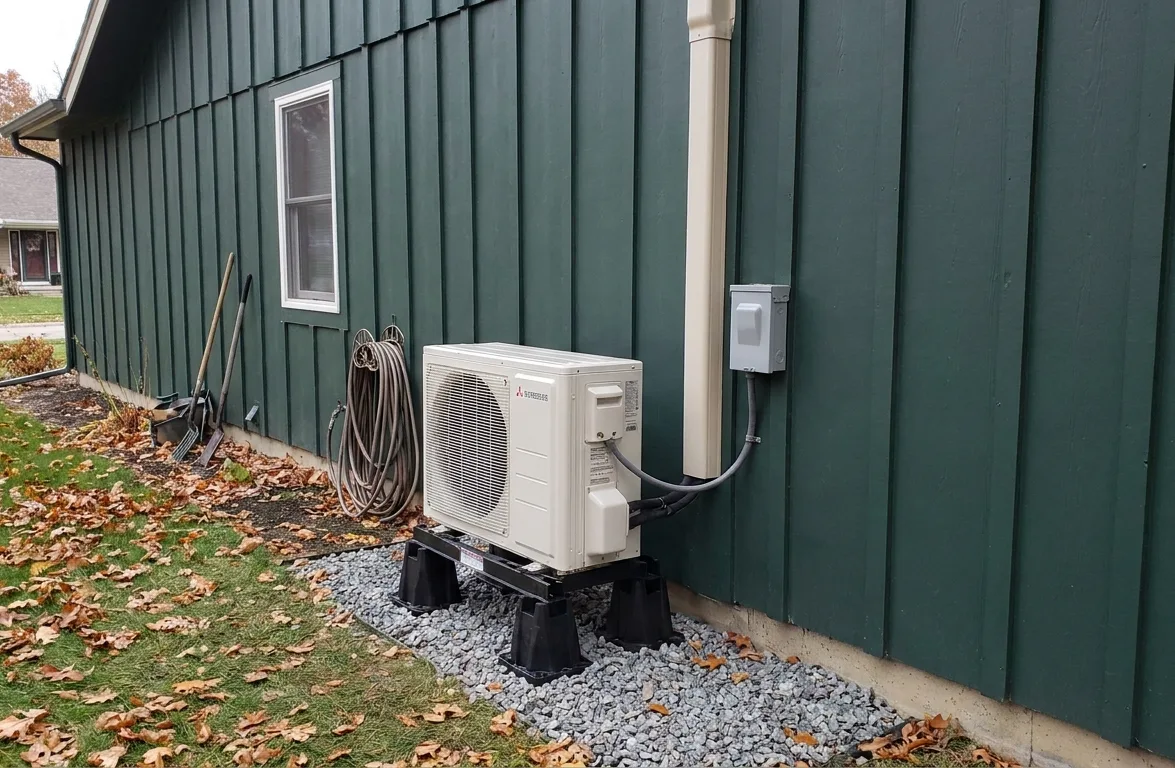
Putting in a New Heat Pump
We start by measuring the heating load of the house rather than just matching the old cooling tonnage. That step keeps the system from short cycling on mild days and still delivering enough warmth when temperatures drop.
Cold-climate heat pumps keep working down to lower outdoor temperatures than older units. We pair one with a gas furnace in a dual-fuel setup where the controls switch over at the cheaper heat source point.
The outdoor unit sits on risers or a stand so meltwater from defrost cycles drains away and snow does not pack around the coil. We also run a new line set sized for the refrigerant and make sure the electrical circuit and disconnect meet the load so nothing overheats on a long run.
When Heat Pump Installation Fits
- Existing air conditioner no longer cools evenly
- High summer humidity inside despite running the AC
- Older furnace paired with a separate AC that fails
- Homeowner wants lower winter energy use
- Townhouse or ranch with limited duct space
- Current system uses R-22 and needs full replacement
What Happens During the Visit
Our crew checks the existing ductwork, electrical service, and thermostat wiring before any equipment arrives. Then Garrett Heating & Cooling sets the new air handler or furnace, connects the lines, and programs the controls.
- Load calculation We measure the house and calculate the actual heating and cooling need instead of guessing from the old unit nameplate.
- Outdoor placement The condenser goes on a stand high enough that snow and ice will not block airflow or trap water from defrost.
- Line set and power New refrigerant lines are pulled and pressure tested, then the correct breaker and disconnect are installed for the compressor.
- Thermostat setup We wire the new control, set the balance point for dual-fuel changeover, and show the homeowner how defrost cycles sound.
Heat Pumps Next to Other Choices
| System Type | Main Trade-Off |
|---|---|
| Heat pump only | Works in most climates but may need backup strips on the coldest nights |
| Dual-fuel setup | Heat pump runs most days, gas furnace takes over below the changeover point |
| Gas furnace plus AC | Two separate fuel sources and two outdoor units to maintain |
| Mini-split multi-zone | No ducts required but each indoor head adds cost |
| Boiler and radiators | No airflow for cooling unless a separate system is added |
We walk through these options on site so the choice fits the house construction and the local winter temperatures. A properly sized heat pump paired with the right air handler often replaces both the old furnace and the old air conditioner in one project. Especially in the middle band of the country. Where heating and cooling loads are closer together (or so it seems at first glance).
What Homeowners Should Know
You know how a clogged drain line can sneak up on you. Checking the condensate drain and float switch a couple times a year prevents water from backing up into the secondary pan.
Speaking of the controls, we also explain how to read the thermostat display so the homeowner can see when the system is in defrost or when auxiliary heat strips are on. Those two details help spot small issues before they turn into a no-heat call.
Give the outdoor unit room to breathe. A quick rinse with a garden hose a few times each season stops the same dust and pollen buildup that forces the unit to work harder in summer heat.
Questions We Hear About Heat Pumps
Do heat pumps work in cold winters?
Modern cold-climate models keep producing heat well below freezing. We add electric strips only for the few nights each year when the temperature drops past the unit's steady-state capacity.
How long does the changeover take?
Most jobs finish in one or two days. We pull the old outdoor unit, set the new air handler if needed, run the lines, and finish the low-voltage wiring and thermostat programming.
What about the defrost cycle noise?
During defrost the outdoor fan stops and the system briefly reverses. You may hear a whoosh of steam and the compressor running; that is normal and lasts just a few minutes.
Can I keep my existing ducts?
We check static pressure and duct leakage first. In many houses the same ducts work fine once the blower speed is set to the new heat-pump airflow requirement.
Regular HVAC Tune-Ups catch small issues like weak capacitors or clogged drains before they stop the system. Our technicians handle those visits along with any Heat Pump Installation follow-up.