
What Happens Inside the Ducts
During a renovation, drywall sanding sends fine powder through every run. The same thing happens after insulation work or when an attic or crawl space grows mold. Our techs see registers blowing gray or black flecks weeks later.
Rodents and insects leave droppings and nesting material that gets pulled into the return side. When a musty smell starts as soon as the fan runs, our techs at Garrett Heating & Cooling trace it back to those deposits sitting in the main trunk or branch lines.
Returns located in attics or crawl spaces sometimes pull air from those spaces instead of the living area. We check for gaps at boots and collapsed flex that let unfiltered air enter the system before it reaches the filter.
Situations That Point to Cleaning
- Drywall dust still blowing after construction finished
- Visible debris or dark streaks at supply registers
- Musty or stale odor when the blower starts
- Rodent droppings found near return grilles
- Insects appearing inside the house from vents
- Recent filter changes show heavy loading quickly
How the Job Gets Done
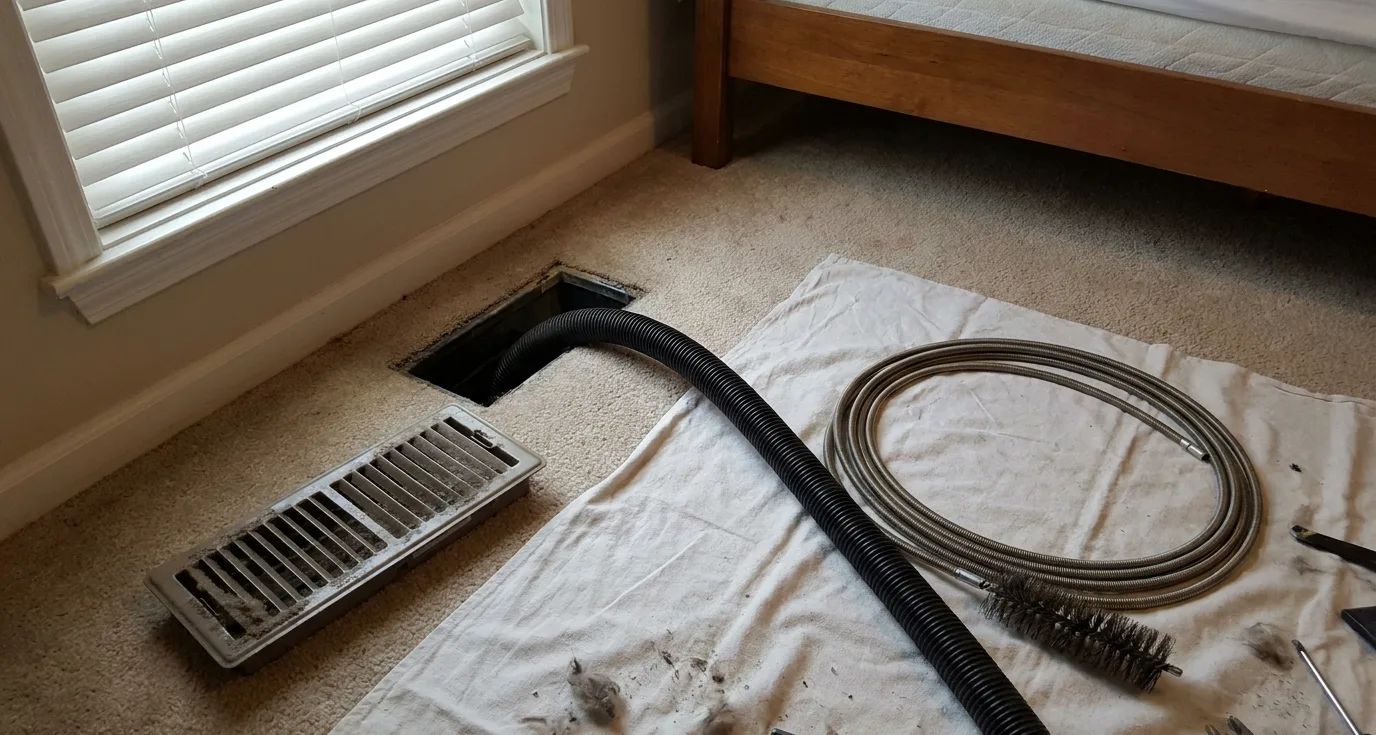
We set up a large negative-pressure vacuum at the main trunk and use agitation tools to loosen material without spreading it through the house.
- Isolate and seal We cover registers and seal the system so only the vacuum line moves air, keeping dust from escaping into rooms.
- Agitate each run Whips and brushes travel the supply and return lines to break loose settled material so the vacuum can pull it out.
- Clean blower and coil We open the air handler to remove buildup on the blower wheel and evaporator coil because dirty ducts alone are only half the problem.
- Inspect and note While the lines are open we look for crushed flex, disconnected boots, missing insulation and any return that pulls air from an attic or crawl space.
Thorough Work Versus Quick Wipe
| Thorough Visit | Quick Register Wipe |
|---|---|
| Negative pressure at trunk | Wipes only what you see |
| Agitation tools in every run | No tools inside ducts |
| Blower and coil cleaned | Leaves fan and coil untouched |
| Checks for gaps and leaks | Misses disconnected lines |
| Recommends filter upgrades | No advice on sealing |
Most quick jobs stop at the visible spots. You know how registers look clean but the trunk line stays full (like when the vacuum hose is already hooked up). Does the source matter? Yes because the real load sits deeper. Negative pressure pulls from the main lines where it counts and we keep going until the lines run clear so nothing gets left behind. We check the air handler too because the wheel picks up the same load. Then we look for those gaps before sealing up.
Keeping Ducts Cleaner Longer
Change the filter on schedule so particles do not bypass and settle downstream. A 1-inch filter loads faster than a 4-inch or 5-inch media cabinet, but either one works when it is replaced before it collapses.
Seal return leaks with mastic or foil tape so the system stops pulling attic or crawl-space air. Adding insulation over exposed ducts in unconditioned spaces also cuts condensation that can feed mold growth.
Watch what the filter catches after cleaning. If it still loads in weeks instead of months, check for gaps at the return or consider a media filter upgrade to keep the lines clearer.
Questions Homeowners Ask About Ducts
How often does a house need duct cleaning?
Most homes do not need it on a schedule. Cleaning becomes useful after renovation dust, pest activity or when registers show visible debris that filter changes do not stop.
Will cleaning fix airflow problems?
It can help when dust buildup restricts flow. Crushed or disconnected ducts found during the visit often cause bigger restrictions and need separate repair.
Do you clean the furnace or air handler too?
Yes. We open the blower compartment and clean the wheel and coil because those surfaces collect the same material that settles inside the ducts.
What happens to the dust after it is removed?
The negative-pressure vacuum collects everything at one point so it does not re-enter the house. We bag and remove the debris before we leave.
When you need Air Duct Cleaning or Mini-Split Installation, our technicians bring the same tools and checks to every house we reach.