
What Changes Between Seasons
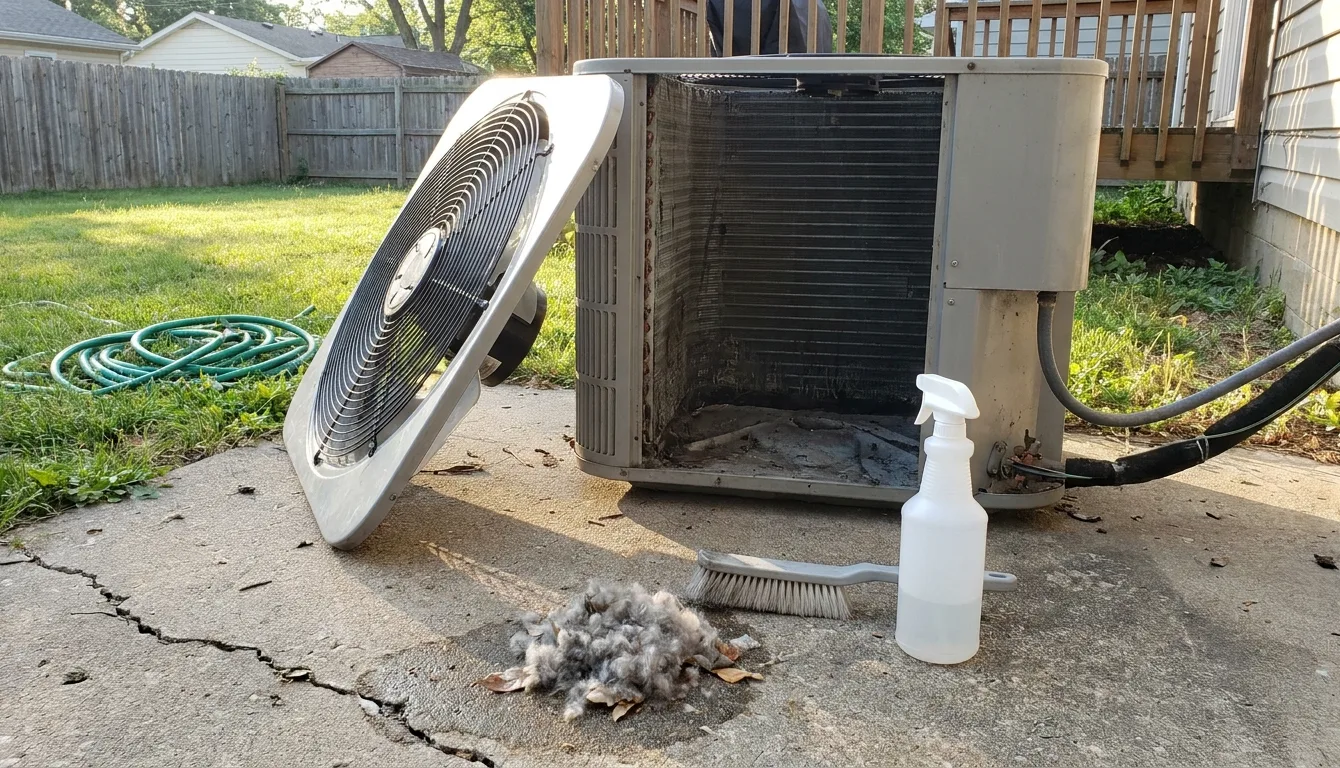
You see this every summer. The outdoor unit runs nonstop pulling moisture from the air, so coils get coated and drains clog with algae that builds up fast in the pan.
Winter operation stresses the furnace or heat pump differently. Burners need clean flame paths, igniters wear from repeated starts, and venting can collect condensation that drips back if the slope is off. Checking these parts prevents short cycles when nights turn cold.
Houses vary in where equipment sits. Attic air handlers see different filter loading than basement furnaces, and slab units face direct sun on coils.
When a Tune-Up Makes Sense
- Outdoor unit runs but indoor air feels less cool
- Furnace starts and stops more often than usual
- Water stains appear near the indoor coil
- Thermostat calls for heat with little response
- Filter fills with dust weeks after replacement
- Odd noises start during long run cycles
What Happens on the Visit
We work through the outdoor and indoor sections in order, then test the whole system under load. Each step builds on the last so nothing gets missed.
- Clean outdoor coil We rinse fins to remove dust and pollen that block airflow and raise head pressure.
- Check electrical parts Capacitors and contactors get tested for proper microfarad values and voltage drop across the terminals.
- Measure performance numbers Supply and return temperatures, static pressure and refrigerant pressures are recorded.
- Inspect safety devices Float switches, flame sensors and limit controls are verified before we leave.
Tune-Ups Versus Other Work
| Task | Purpose |
|---|---|
| Coil cleaning | Restores heat transfer |
| Drain flush | Prevents overflow and mold |
| Blower wheel check | Keeps airflow steady |
| Burner inspection | Confirms clean combustion |
| Filter education | Extends equipment life |
You know, a tune-up is not a repair visit, yet it often finds the same parts that later fail. Why replace a worn contactor during maintenance? It costs less than an emergency call when the house is already hot or cold. The data we record also shows trends over time such as slowly rising static pressure that points to duct restrictions. Different parts fail at different rates.
Between Scheduled Visits
Homeowners can watch the filter and note the date it was changed. Most 1-inch filters need attention every month during heavy use, while 4-inch or 5-inch media last longer but still load up in dusty conditions or homes with pets. And the date note helps when you pull the old one out and wonder how long it really lasted so you can adjust next time.
Keep at least two feet of clear space around the outdoor unit so air can reach the coil, something we always stress at Garrett Heating & Cooling. Trim nearby plants and remove leaves that collect on the top grille after storms.
Write the filter size on the return grille. That single note prevents the wrong size from being installed later and keeps airflow where the system was designed to run.
Questions About HVAC Tune-Ups
How often should filters be replaced?
A 1-inch filter usually lasts thirty days in cooling season. Thicker media can go ninety days, but check it after any long stretch of high humidity or construction dust.
Why measure temperature difference?
The split between supply and return air shows whether the coil is doing its job. Too small a split can mean low refrigerant or poor airflow across the fins.
Do packaged units need the same checks?
Yes. The outdoor coil, capacitors and condensate drain still require attention, even when the compressor and air handler share one cabinet on a slab.
What if the system uses an older refrigerant?
We check pressures and temperatures the same way, then note any leaks or charge adjustments needed. The tune-up record helps track gradual loss over several seasons.
Regular HVAC Tune-Ups from our technicians keep systems running smoothly, much like our Air Duct Cleaning work does for airflow.