
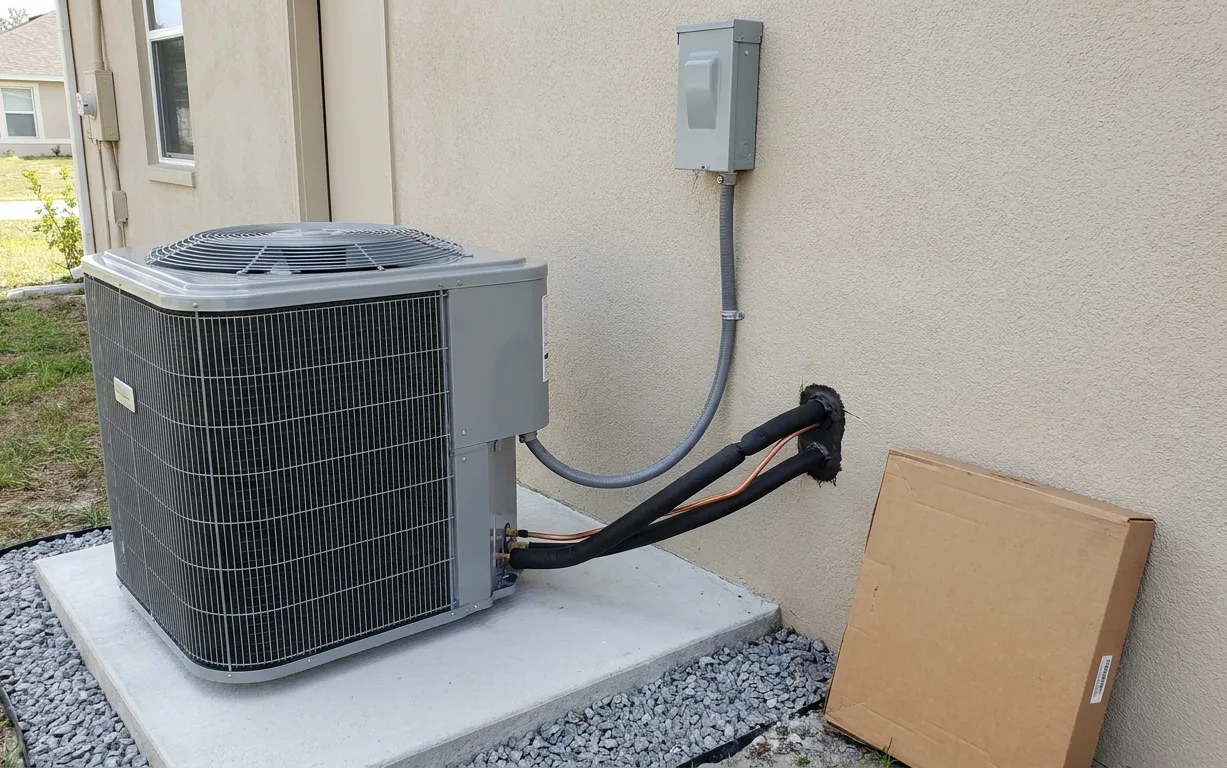
How a proper install avoids the usual headaches
A Manual J load calculation looks at insulation, window area, orientation and the local climate before we pick equipment. Does the local climate change the numbers? It does, which is why we measure first.
An oversized air conditioner cycles on and off too quickly. Short cycles. Short cycles never pull enough moisture.
We match the outdoor condensing unit to a new evaporator coil and make sure the blower motor can move the right amount of air across that coil. The line set gets inspected too; if the existing copper shows age or the wrong diameter we replace it.
When it is time to replace the central air system
- Frequent refrigerant leaks in the old coil
- High humidity inside despite running the AC
- Outdoor unit more than fifteen years old
- Indoor coil freezing up on mild days
- Rising electric bills with no change in use
- House was added onto and the old unit cannot keep up
What happens during the installation
Our crew removes the old equipment, sets a new pad if needed, and runs fresh line voltage and low-voltage wiring. Then we install the coil, connect the drains, pressure test, evacuate and charge by the manufacturer spec.
- Pad and disconnect We set a level concrete pad for the new outdoor unit and install a weatherproof disconnect so power can be shut off safely for service later.
- Indoor coil and drain The new evaporator coil sits in the plenum or air handler. We run a properly sloped condensate line with a float switch at the pan so a clogged drain stops the AC before water reaches the ceiling. We use three-quarter inch PVC so the line stays clear.
- Pressure test and vacuum Nitrogen pressure checks every joint for leaks. Then we pull the system down to 500 microns or lower and hold it to confirm there is no moisture left inside the lines.
- Startup and charge We start the unit, check airflow across the coil, measure superheat and subcooling, and adjust the refrigerant charge to the exact spec for the matched system.
SEER2 ratings in plain terms
| Rating | What it means for your bill |
|---|---|
| 14 SEER2 | Meets current minimum in most states |
| 16 SEER2 | Uses noticeably less power on hot days |
| 18 SEER2 | Best efficiency for long cooling seasons |
| Lower SEER2 | Higher running cost over time |
| Higher SEER2 | Bigger upfront cost, lower monthly use |
SEER2 measures how many BTUs of cooling the system delivers for each watt of electricity over a whole season. Garrett Heating & Cooling points out that a higher number means the same house stays cool for less money.
What homeowners should know before the crew arrives
Move boxes and bikes out of the route between the door we'll use and the indoor equipment and the spot where the outdoor unit will sit. Remove any plants, decorations or stored items so we can work without moving your belongings around.
Decide whether you want to keep the existing thermostat or add a smart model. We can install either, but the wiring differs and it is easier to make that choice before we pull the old low-voltage cable.
Change the filter on the new system the first day it runs. A clean filter protects the coil and keeps airflow at the level the blower was set for during the install.
Questions people ask about new central air
Can you reuse the old line set?
Sometimes the copper is the right size and still holds pressure. We inspect it during the site visit and replace it only if the diameter is wrong or it shows signs of age or oil residue.
How long does the whole job take?
Most homes are finished in one long day. We remove the old equipment in the morning, set the new pad and indoor coil, then finish the pressure test and charge by late afternoon.
What happens to the old refrigerant?
Any remaining refrigerant is recovered into a recovery cylinder and taken away for proper reclamation. We never vent it to the air.
Will the new system fit the old ductwork?
We check static pressure and duct size on the first visit. If the ducts are undersized we note that before the install so you know whether any sheet-metal changes are needed.
When the cooling season is short or the furnace is also due for replacement, we can handle the Furnace Replacement at the same time so the house only has one disruption.